The core consistency valued by guests
By Will Hewitt on October 13, 2026

Will Hewitt
Director, 59club UK & Ireland, 59club Asia
59club are undoubtedly best known for our work in the golf industry, but we are increasingly active in a multitude of hospitality settings including health and fitness, hotels, restaurants and day spas, explains Will Hewitt, Director GB&I and Asia
Many venues within golf, who have seen the benefits our data and training have delivered, are now applying the 59club model to their wider business. On the surface, the product and the people involved appear very different, but the similarities of what constitutes a memorable guest experience are surprisingly similar.
The 59club mystery shopping experience does a great job of showcasing the value of staff interactions in the day spas we visit.
Spas offer more than treatments
In a day spa environment, the overall experience is shaped by far more than just treatments, products or décor. While these tangible elements are important, the way staff members interact with clients, and with each other, plays a defining role in how a guest feels during and after their visit. This mirrors the wider hospitality industry, where service quality, emotional connection and consistency often matter just as much as facilities or offerings. Understanding why staff interactions are so important helps spa teams, like hotels and restaurants, create a more welcoming, relaxing and ultimately more successful environment.
Every guest interaction sets the tone for the visit. Starting from the first phone call or online booking to the final checkout, clients are constantly picking up on verbal and non-verbal cues.
A friendly greeting, warm smile, clear communication and a calm, confident attitude help guests feel comfortable right away. This is no different from any other hospitality setting, be it golf club, hotel, restaurant or retail outlet, where first impressions strongly influence guest satisfaction.
Many people visit spas to relax, de-stress or treat themselves, and positive interactions help them feel safe, cared for and understood – just as hospitality guests expect to feel valued and looked after from the moment they arrive. When staff take time to listen and explain services clearly, it reduces anxiety and builds trust.
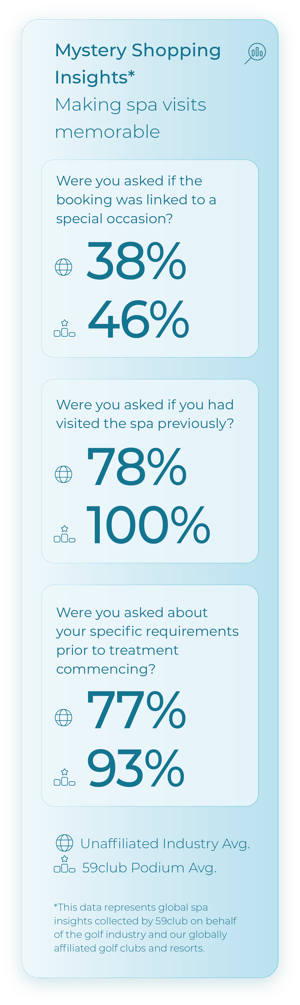
59club data suggests there is significant opportunity within these early touchpoints. For example, the reason for visiting is only requested during 38% of booking calls, despite this being a key moment to personalise the experience.
At arrival, guests are asked if they have visited before 78% of the time, yet receptionists engage in general conversation on only 64% of visits. In both spa and wider hospitality settings, these missed moments represent lost chances to create a warmer welcome, gather valuable guest insight and deliver a more tailored, memorable experience.
When it comes to the treatment itself, truly understanding the needs of the guest support the delivery of a personalised experience, ensuring preferences and goals are met. The 59club podium do this 93% of the time versus the wider industry at 77%.
How a short conversation can build trust
Throughout the hospitality industry, effective communication between staff members is just as important as communication with guests.
When front desk staff, therapists and support team members share information clearly, the operation runs more smoothly.
Notes about client preferences, sensitivities or previous treatments allow for personalisation and help prevent errors.
This behind-the-scenes teamwork may not always be visible, but guests will quickly notice when an experience feel seamless, organised and professional.
Staff interactions also shape the overall atmosphere of the spa, much like they do in any hospitality environment. Guests are especially sensitive to energy and mood in spaces designed for relaxation and escape.
When staff treat one another with respect and collaborate effectively, it creates a calm, positive atmosphere that guests can feel.
Conversely, tension, poor communication or any visible frustration among staff can disrupt the whole experience, just as it would do in a hotel lobby or dining room.
A strong, supportive team culture helps maintain the soothing, welcoming ambience that defines both great spas and great hospitality venues.
Positive internal interactions also support staff development and service consistency. Open communication encourages learning, knowledge-sharing, and confidence – qualities that elevate service standards across the team.
This mirrors hospitality best practice, where well-supported employees are much better equipped to handle any challenges calmly, adapt to guest needs and deliver consistent, high-quality service.
Finally, strong staff interactions contribute directly to long-term business success. Guests are more likely to return when they feel recognised, remembered and personally valued – whether that means being greeted by name, having preferences noted or simply feeling genuinely welcomed. These small but meaningful moments build loyalty and trust over time, a principle that sits at the heart of both spa and wider hospitality operations.
At the same time, a positive work environment improves staff retention, reducing turnover and creating the consistency that guests value.
“When staff take time to listen and explain services clearly, it reduces anxiety and builds trust”