By 59club on February 18, 2026

Will Hewitt
General Manager, 59club UK&I
Will Hewitt, 59club’s UK&I General Manager, is an expert in measuring clubhouse experiences. With the help of two industry partners – Entegra’s Iain Shaw and Matthew Prosser of Agilysys – he offers a practical guide to raising the bar (pun intended!) in this crucial area

The clubhouse experience is a vital part of the overall golf journey, extending the enjoyment of the sport well beyond the fairways and greens. For many golfers, a round is not simply about playing 18 holes, it is also about the social, cultural and hospitality elements that surround the game, and the clubhouse sits at the very heart of that.
As the game has broadened its appeal and welcomed millions of new participants in recent years, it is more important than ever to question whether your clubhouse experience is positioned correctly to attract and retain these new players.
A club should be seeking to understand member and guest preferences in relation to the environment, entertainment and menu offerings. An audience is willing to part with their hard earned money, but only if you offer a product which they find appealing.
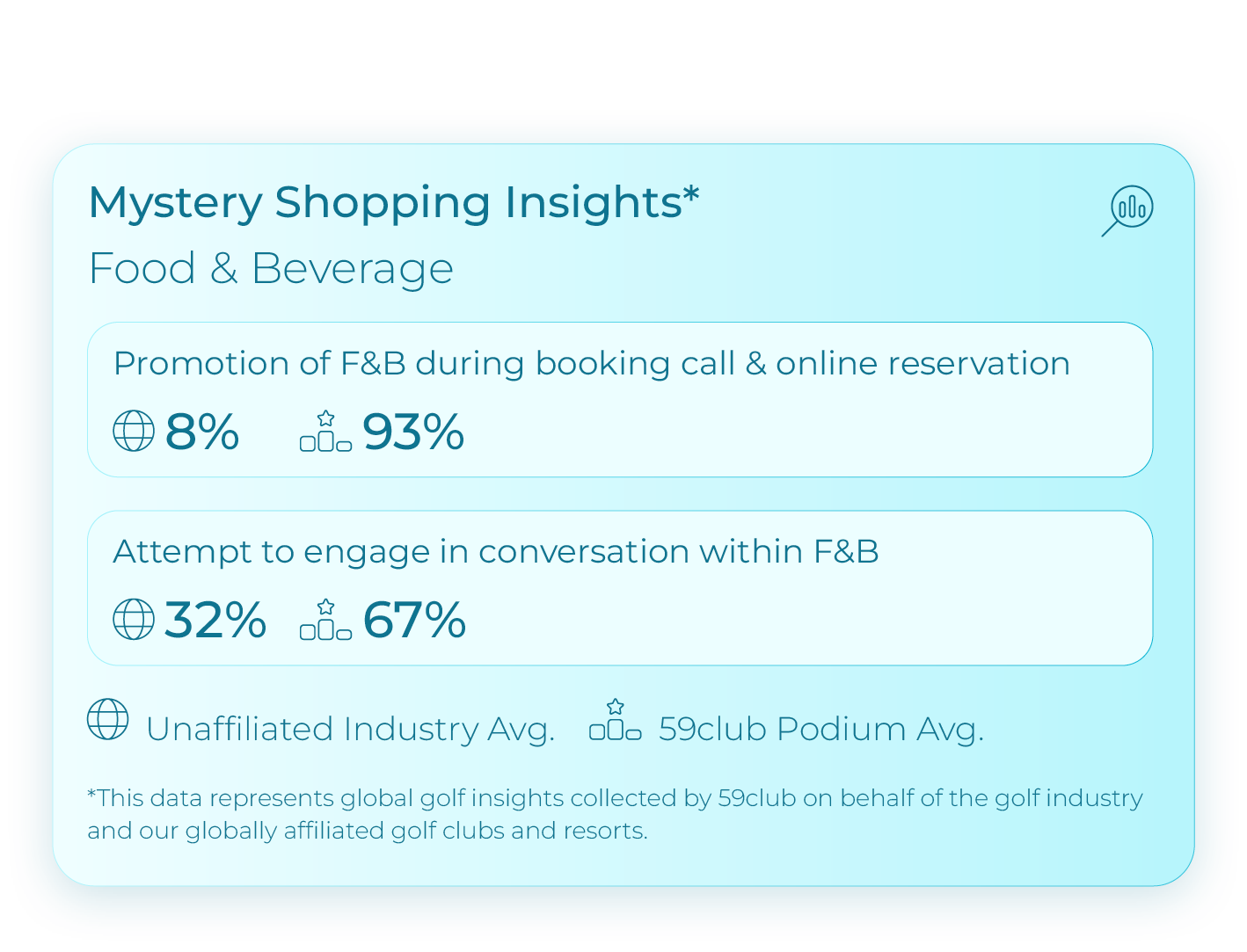
59club data highlights three key areas where venues often fall short in clubhouse operations:
Managing guest expectations
Venue websites and pre-arrival communication often do a poor job of really selling the food and beverage offering, failing to identify opening/serving times and displaying limited imagery to showcase and encourage golfers to enjoy the wonderful environments we have.
Product and people inconsistency
High staff turnover, peaks and dips in demand, a lack of standard operating procedure, poor procurement practices and weak inter-department communication often leads to the delivery of inconsistent staff interactions and product presentation.
Engagement
If we are aiming to provide a sense of community and a great buzz within the clubhouse, it is essential that staff display a genuine interest in their customers. Providing a tailored experience will help the golfer feel welcome and valued but, perhaps more importantly, our data suggests that engagement with customers makes it nine times more likely that an upselling opportunity will be suggested


Entegra’s Iain Shaw
is a former chef and avid golfer with 30 years’ experience in the industry
Tackling the areas outlined overleaf might seem overly simplistic when we know that Club Managers face significant pressure to effectively manage food and beverage costs and deliver a product which is considered to be in line with member expectations.
So let’s start at the beginning. Iain Shaw, from our partners at Entegra, who are currently working with a wide range of clubs and resorts, shared the following advice to first looking at your procurement practices to ensure that you have the right foundations in place for your business.
Closing the gap between theoretical and actual costs
The off-season isn’t just a pause in the calendar; it’s a chance to reset. With kitchens quieter and fewer guests on site, club managers have the headspace to tackle issues that get buried during peak months. Now is the time to review procurement, interrogate the numbers and close the margin gaps that quietly erode profitability. One of the biggest blind spots is the gap between theoretical and actual food costs. On paper, menus are meticulously costed, supplier terms are in place, and stock systems should provide control. Yet, in practice, margins often fall short. Why? Because small, everyday variances accumulate into significant leakage. Portion sizes creep up. Waste rises when demand is unpredictable. Supplier substitutions shift cost bases. And in golf, the irregular flow of society days, corporate bookings and member dining makes forecasting especially tricky.
Closing that gap requires a sharper procurement approach. Start with accurate demand forecasting, aligning orders with expected footfall across member dining, society days and corporate events. Build in flexibility with suppliers to scale volumes up or down.
Next, tighten product specifications to control quality and portion size – small variances here often add up to major losses.
Use benchmarking and invoice checks to ensure agreed terms are being honoured and highlight where costs drift.
Finally, review your supply chain for missed efficiencies: consolidating orders, standardising products and aligning delivery schedules all reduce waste and improve margins.



Matthew Prosser of Agilysys
has 25 years’ experience in the technology and hospitality sectors
With a structured and streamlined approach to procurement, a venue should have more resources available to focus on the front of house experience, and just as in procurement, technology can be a huge support in providing the information we need to create a truly tailored and memorable experience.
Matthew Prosser of Agilysys shared the following views:
A personalised experience, not just a meal
In the competitive world of hospitality, guests at prestige golf courses and resort properties no longer simply want a meal; they desire an experience tailored to them.
This expectation for personalisation is now a highly significant factor in guest satisfaction, with 71% of consumers expecting personalised service, and 76% feeling frustrated when they don’t receive it.
Modern Point of Sale (POS) systems are evolving from simple transaction tools into a strategic asset for delivering this level of service. The key lies in leveraging data to create a single, unified guest profile that captures details like seating preferences, favourite dishes and critical dietary requirements or allergens.
This unified profile is visible across the entire property, from the front desk to the spa and the golf course, allowing staff to offer a truly personalised experience at every touchpoint.
Seamless operations, enhanced service
Beyond personalisation, modern POS technology addresses the operational complexities of a busy food and beverage setting. The right technology can streamline kitchen operations with digital kitchen display systems (KDS) that ensure real-time order transmission, improving accuracy and reducing waste. Handheld, mobile POS devices empower staff by allowing them to take orders and process payments tableside.
This new approach reduces the time staff spend running to a static terminal, maximizing their face-to-face time with guests to provide more attentive service. This increased efficiency can lead to faster turn times and higher check averages through easier upsells.
Empowering guests and staff
Today’s digital-first customer values convenience, and modern POS systems cater to this by offering self-service options. This isn’t about replacing staff, but rather providing guests with choices that suit their preferences.
Features like ordering and paying via QR code at the table or using guest self-checkout can free up staff, and allow them to focus on enhancing the overall guest experience, rather than being tied to a register. The result is improved guest satisfaction and loyalty, as well as a much more efficient and effective staff.
In summary, the clubhouse experience transforms golf from a purely sporting activity into a much fuller lifestyle experience. Combining social interaction, hospitality and community spirit plays a crucial role in how golfers perceive their day, ensuring that their time at the club is as memorable off the course as it is on it.

NEW SOUTH WALES GOLF CLUB DRIVES CUSTOMER SERVICE EXCELLENCE

Four keys to driving excellence